
Sump Pump 101
What is a sump pump?
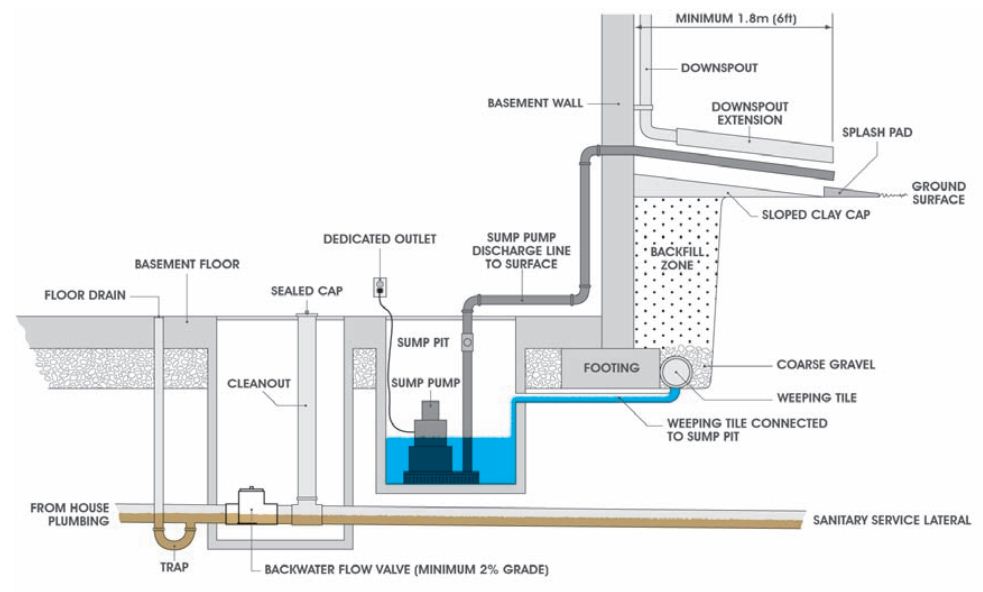
A sump (also called a sump basin, sump pit, or sump well) is a hole built at the lowest point in a basement or crawlspace to direct and collect excess groundwater and rainwater. It then pumps the water away from your home and back into your yard.
Help for Any Disaster
If you’re dealing with an unexpected disaster, we’re here to help. Contact us today to talk to an expert.
888-545-8514
248-669-2600

What does a sump pump do? how can it help prevent water damaging your property
Sump pumps move excess water away from a structure’s foundation to help prevent water damage.
How does a sump pump work?
When the sump starts to collect water, the sump pump will kick on and begin pumping water out of the sump and into a more desirable location away from a structure’s foundation, like a sloped yard or a municipal storm drain.
Sump pump systems typically include three components:
- Primary pump – The main source of water removal, typically powered by electricity.
- Backup pump – Used when the primary pump fails, or the system loses power, or when the primary pump can’t remove water fast enough. Backup pumps are powered by either battery or water.
- Sump pump alarm – Lets you know when the water in the sump has risen to a level requiring additional measures to remove the water from the sump.
Different Types of Sump Pumps
There are three main types of sump pumps:
- Submersible sump pump – Uses a watertight electric motor connected to the pump housing and is designed to operate underwater. It sits below the basement floor inside the sump basin.
- Pedestal sump pump – Uses an open electric motor and is not designed to be submerged. Also called a “column” or “upright” sump pump, it sits above the sump basin and above the basement floor.
- Water-powered sump pump – Runs on municipal water pressure rather than electricity and is designed to operate underwater. It requires adequate water pressure, so it may not be suitable for homes with low pressure or those supplied by a private well.
Is sump pump failure covered by insurance?
Backup coverage for sewer or drain problems is often available as an optional add-on through your insurance provider, depending on your policy and location. Reach out to your insurance agent to review your current coverage, understand what may be excluded, and discuss any available endorsement options that can help protect you from unexpected repair and cleanup costs. Learn more about water back up coverage here.
Do I need a sump pump?
Many basements have sumps built directly into the floor. If yours does, you’ll only need the pump itself. If your basement doesn’t already have a sump, a plumbing professional or contractor can advise whether it can be retrofitted.
For more information on sump pumps, or to verify whether a specific pump is certified, visit the Sump & Sewage Pump Manufacturers Association.

If your Sump Pump fails call R & S restores
R & S Restores is available 24/7 to assist with water mitigation and water damage restoration. Call 248-669-2600 for assistance.